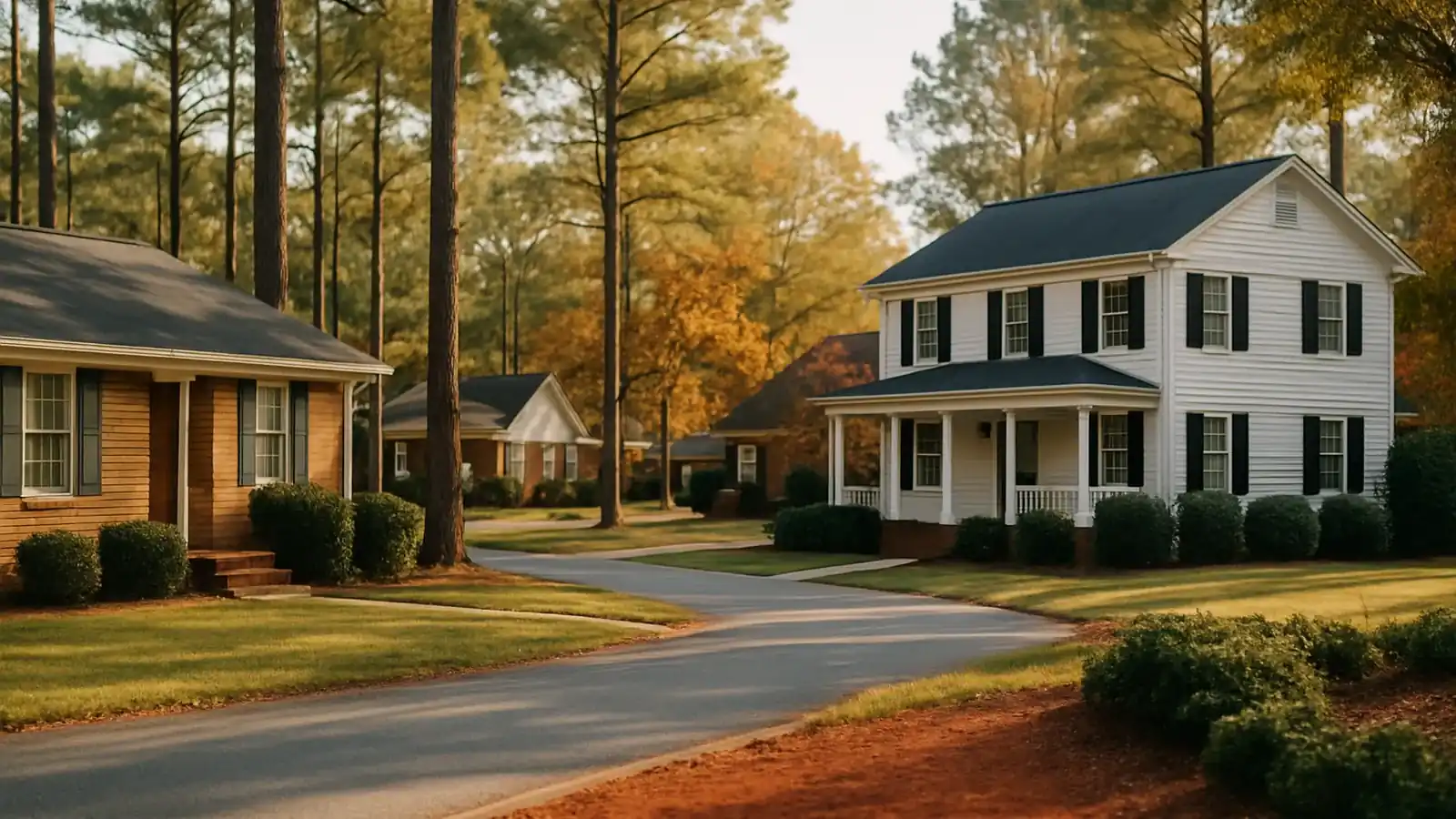
Expect $1,500–$6,000 for most Hephzibah mold removal; if the crawl space needs its ground sealed and a drying system added, the figure is $2,500–$9,000. On older houses with bare dirt underneath, a sealed barrier and corrected downspouts are often most of the answer.
Older rural stock, minimal moisture control
Much of Hephzibah’s housing predates any expectation of vapor control. Crawl spaces with bare ground, minimal insulation detailing, and ventilation designed before central air existed. That is period construction working as built, not a defect.
What it means practically is that these houses have no defense against a climate that runs above 70 percent relative humidity for months. The ground releases vapor, the vents deliver more, and the framing works through summer after summer.
The fixes here are usually specific and affordable
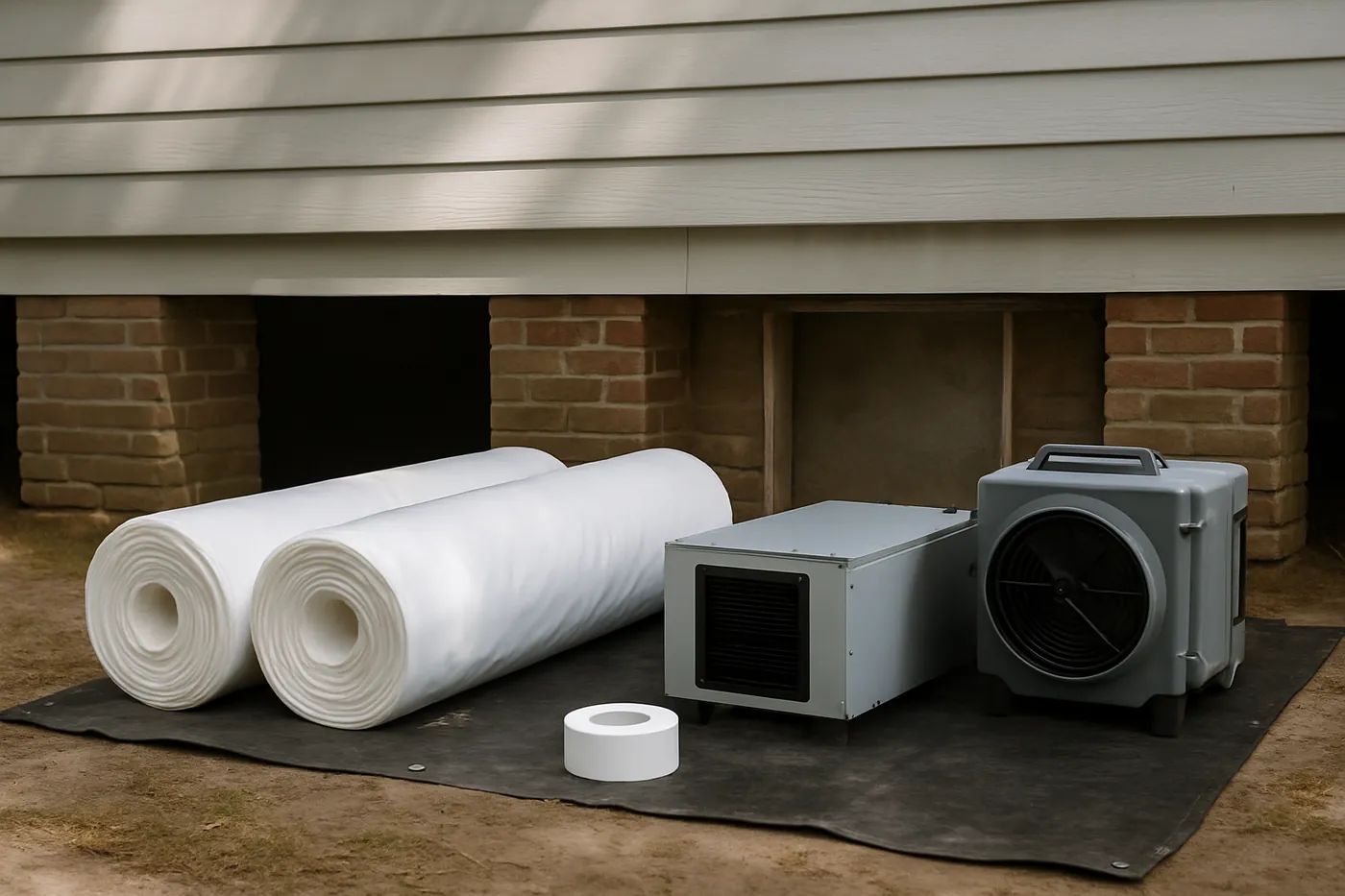
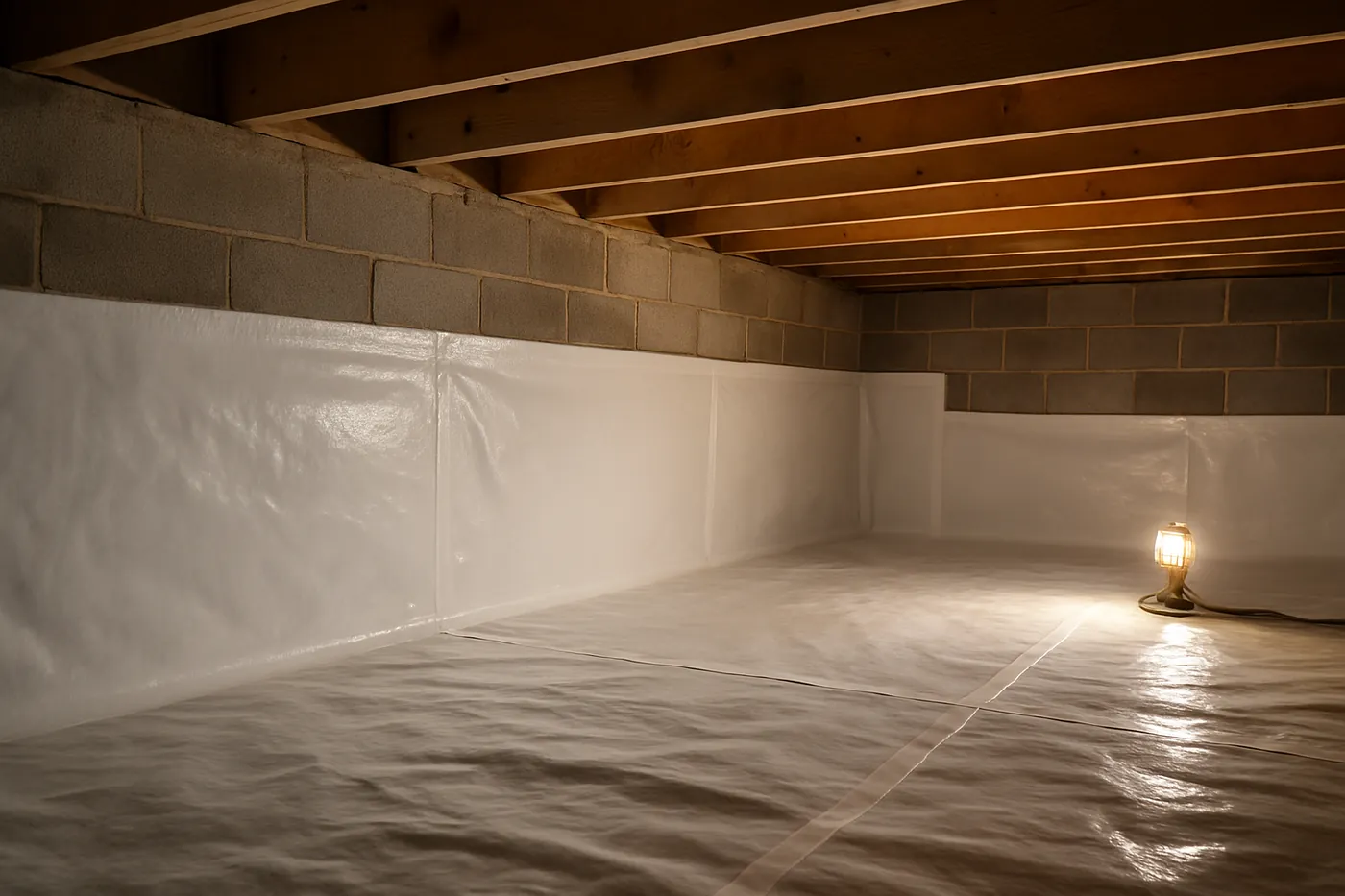
A proper sealed vapor barrier, corrected downspouts and grading, and mechanical drying where the space needs it. That is frequently the whole answer on this stock, and it costs a fraction of what people fear when they first smell something. The cost guide prices each piece separately so you can see it.
Asked in Hephzibah
Our house is older with a dirt crawl space. Is that a problem?
It is period construction working as built, not a defect - but it has no defense against a climate running above 70% humidity for months. The ground releases vapor, the vents deliver more, and the framing works through summer after summer without a drying season.
Is the fix expensive?
Usually more affordable than people fear. A properly sealed vapor barrier, corrected downspouts and grading, and mechanical drying where needed is frequently the whole answer on this stock. Crawl space scopes run $2,500-$9,000, and the simpler ones sit well under that.
Should I add more crawl space vents?
No - that is the most common wrong instinct here. Through a CSRA summer, outside air is wetter than the crawl space, so more venting delivers more moisture. Sealed ground plus mechanical drying is what actually works.
What the Census shows in Hephzibah
About 1,400 homes stand in the city of Hephzibah by the Census Bureau's 2020-2024 count. The 1980s were the largest decade at about 21 percent, followed by the 1990s at 18 percent and the 1970s at 15 percent. Roughly 40 percent predate 1980, and close to 6 percent date from 1939 or earlier. Only about a fifth was built in 2000 or later, so bare-ground crawl spaces of the kind described above are common.
Flood map: approximate zones only
FEMA has no detailed flood study for the streams near Hephzibah's center. Its map shows approximate Zone A strips along the drainageways, with everything else in Zone X, and no Zone AE within two miles. That is a lower creek-flood exposure than much of the metro, and it points the inspection toward ground vapor, grading and downspouts rather than rising water. That does not rule out a wet lot: low ground beside one of those Zone A drainageways can still hold water after a long rain, so mention it if your yard stays soft for days.
City permits
Hephzibah is an incorporated city in Richmond County, so permit questions for barrier, drainage or framing work go to the city. Ask the specialist which parts of the scope need a permit before you sign.
Get an Augusta mold inspection
Tell us what you’re seeing or smelling: a musty smell coming up through the floor, cupping hardwood, condensation on ductwork, staining on a wall, and we’ll pass it to one independent local specialist for an inspection that includes going under the house. A local specialist serving Augusta calls you back.