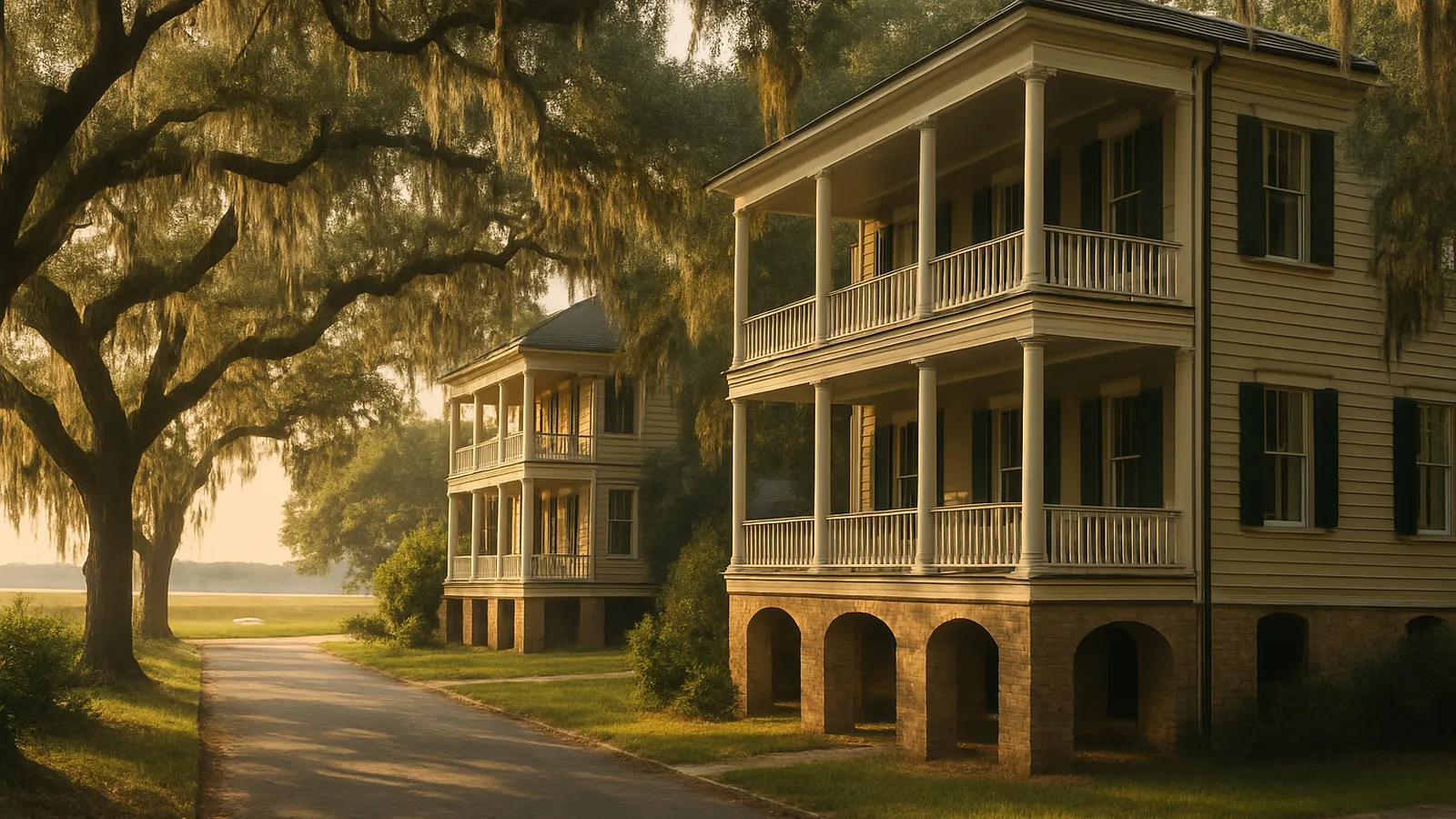
Crawl space mold removal in Augusta runs $2,500–$9,000, covering framing remediation plus what stops recurrence: a sealed vapor barrier over the ground, drainage correction, and a dehumidifier sized for summers that hold relative humidity above 70%.
Why bare ground and CSRA air combine so badly, what turns up under older houses, and the fix in order.
The ventilation instinct is backwards here
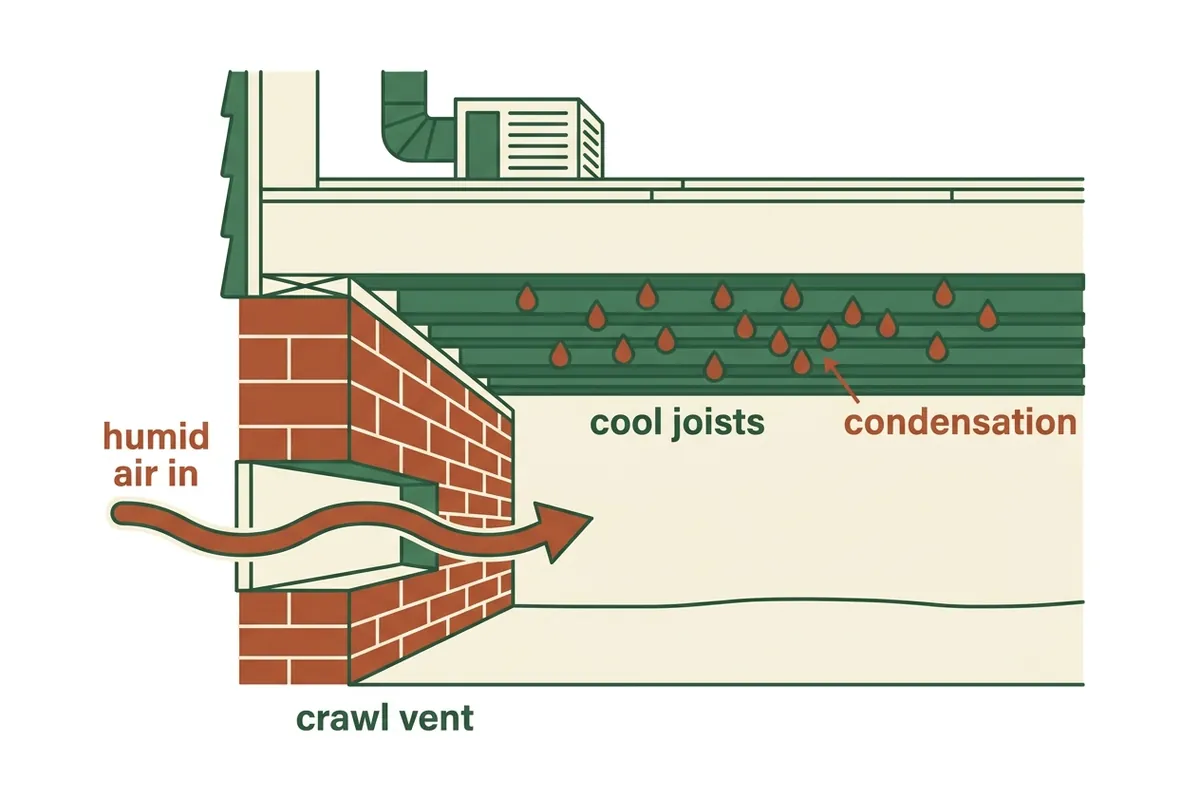
Crawl spaces in older Augusta housing were built with vents because the era’s thinking was that airflow dries a space. That logic works in a dry climate. It fails in the CSRA between roughly June and September, when outside air routinely carries more than 70 percent relative humidity. Open the vents on a July afternoon and you are pumping moist air into a space whose framing sits cooler than that air — and the moisture comes out of the air onto the wood.
Underneath, bare ground is doing its own work. Soil is never truly dry in a market receiving 46-plus inches of rain a year, and every hour it releases vapor upward into the space. Between the ground below and the vents at the perimeter, the crawl space receives moisture from two directions and exports none.
What the wood tells you
| What turns up | What it means | What it takes |
|---|---|---|
| White or gray growth on joists | Surface colony on damp wood — caught early | HEPA removal, barrier, moisture control |
| Black staining on subfloor | Sustained wetting, often under a bath or kitchen | Remediation plus the leak source |
| Insulation fallen or hanging | It absorbed moisture until it lost its grip | Removal and replacement after drying |
| Condensation on ductwork | Cold ducts in humid air — a second moisture source | Duct sealing and insulation assessment |
| Soft wood at a probe | Wood-decay fungi — past mold, into structure | Structural repair, not just cleaning |
The fix, in the order that holds
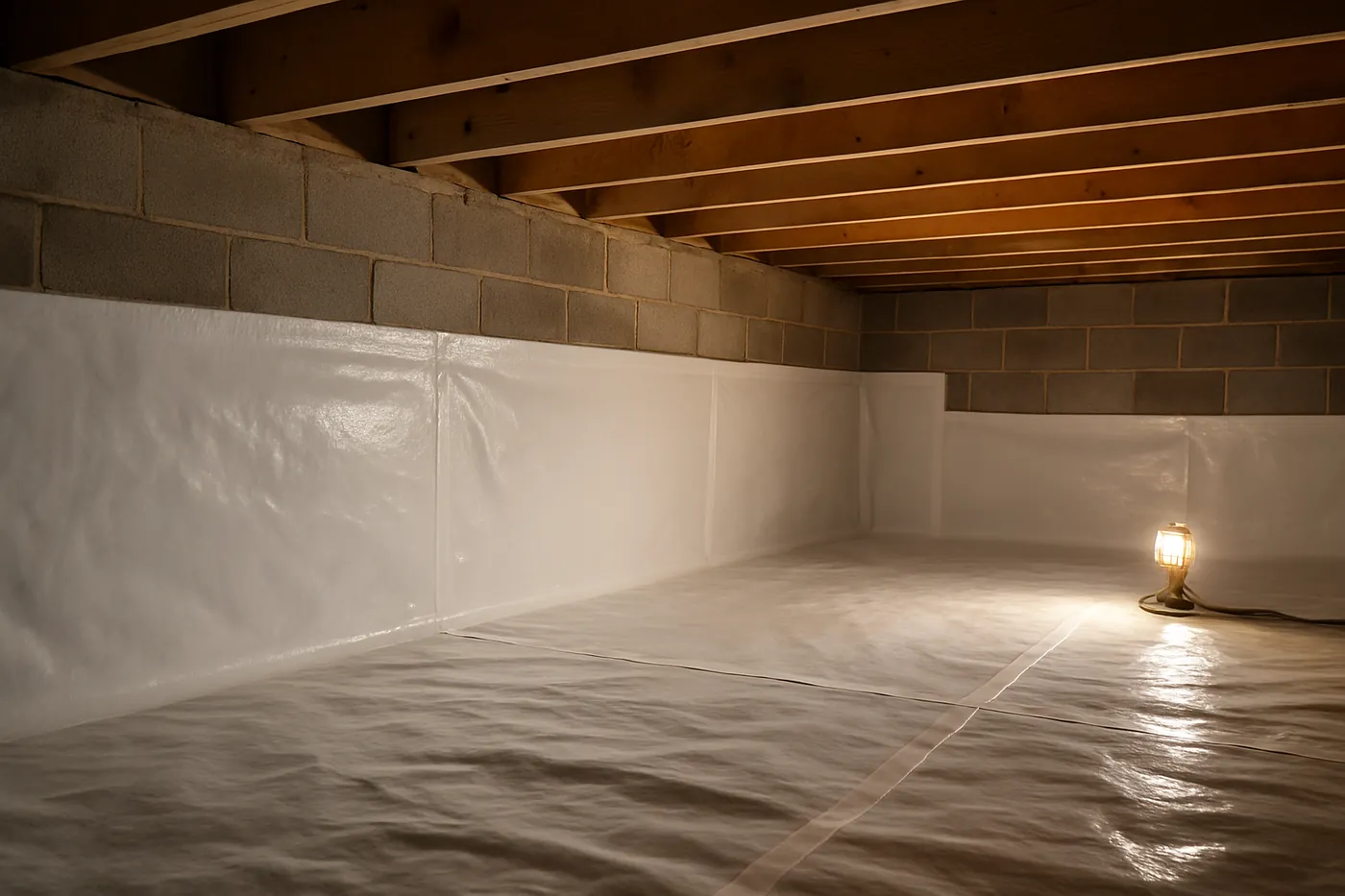
Bulk water first — where roof and lot water goes, whether grade carries it away, whether storm runoff pools against the foundation. Then remediation: HEPA vacuum and wipe the framing, remove insulation that absorbed moisture, treat what remains. Then seal the ground with a real vapor barrier — overlapped, taped, run up the piers and walls — because bare soil will re-humidify a clean crawl in one summer. Then mechanical drying where the space needs it, because in this climate the outside air is not going to help for months at a time. Ductwork running through the space gets checked while someone is under there; sweating or contaminated ducts are covered on the remediation page. Every price is in the cost guide.
Crawl space questions, straight answers
Why do Augusta crawl spaces grow mold?
Bare ground plus 70-percent summer air. A dirt crawl space releases water vapor continuously, and CSRA summer air is humid enough that opening the vents delivers more moisture than it removes. The framing above sits cooler than the outside air, so the moisture condenses on joists rather than passing through.
What does crawl space mold removal cost here?
Most crawl space jobs run $2,500-$9,000. Cleaning the framing is the smaller half; the number is driven by what stops recurrence - a sealed vapor barrier over the ground, exterior drainage correction, and frequently a dehumidifier sized for a climate that stays humid for months.
Should I open the vents to dry it out?
Not in summer here. Through the humid months outside air carries more moisture than the crawl space does, so ventilation delivers water to cool surfaces instead of removing it. Sealed ground plus mechanical drying is what actually works in this climate.
Is the crawl space really affecting my living space?
The crawl space is really affecting your living space, and the physics are straightforward. Warm air rising through a house pulls replacement air from the lowest point, so a meaningful share of what you breathe upstairs entered through the crawl space. That is why a musty hallway is frequently diagnosed under the floor.
How do I know if my crawl space is the problem?
Open the hatch and use your nose - a musty smell at the opening is diagnostic. Then look for condensation on ductwork, insulation sagging or fallen, dark staining on joists, standing water after a storm, and rust on metal. Any one justifies the inspection.
Get an Augusta mold inspection
Tell us what you’re seeing or smelling — a musty smell coming up through the floor, cupping hardwood, condensation on ductwork, staining on a wall — and we’ll pass it to one independent local specialist for an inspection that includes going under the house. A local specialist serving Augusta calls you back.