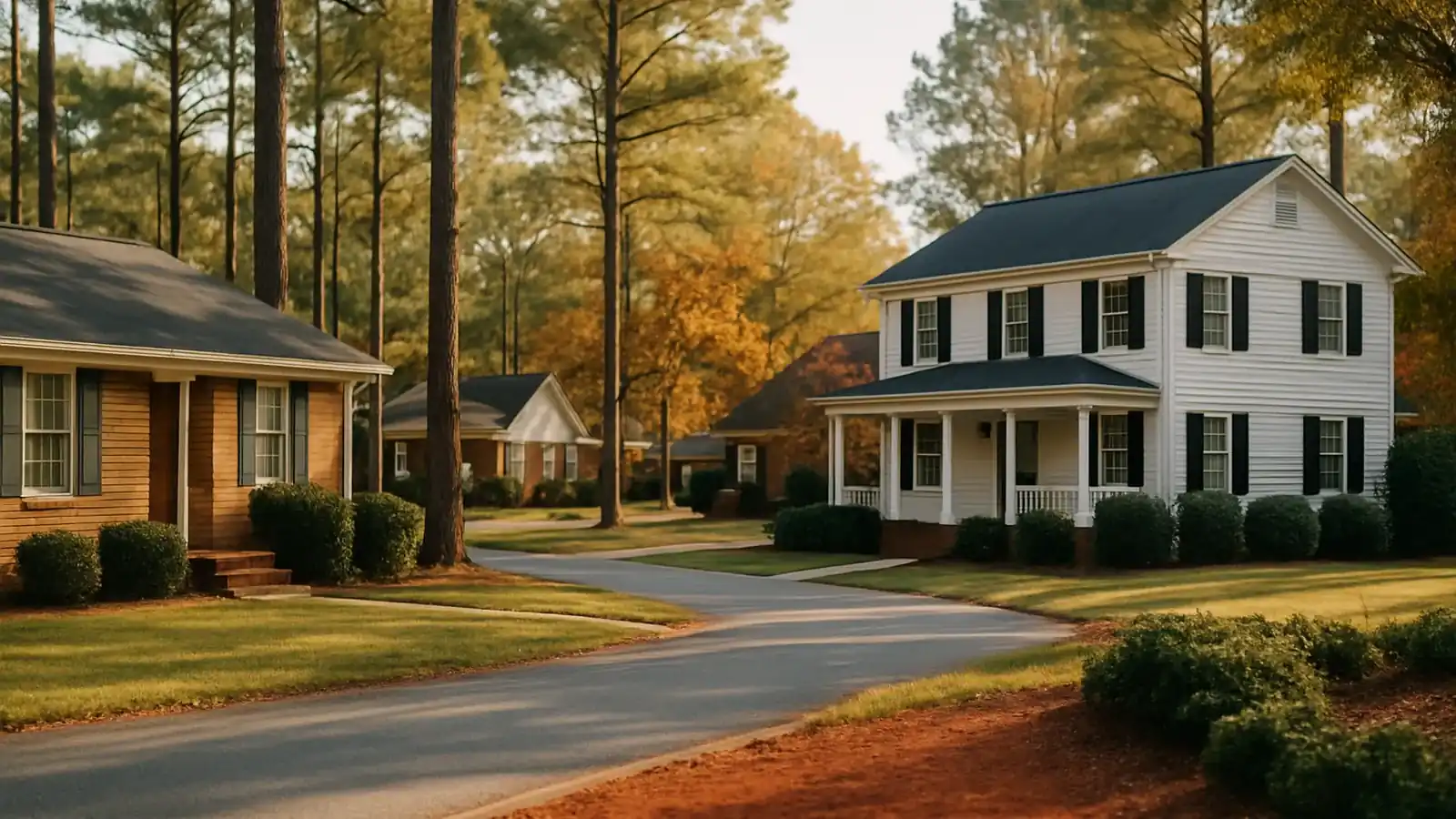
Evans mold removal usually runs $1,500–$6,000, with crawl space work at $2,500–$9,000 when sealed ground and drying equipment are needed. In the many Evans homes built since 1990, the cause is often an air conditioner that cools without drying, and that fix can cost far less than remediation.
Newer, tighter, and worse at handling humidity
Evans has absorbed much of the metro’s residential growth, and its housing is younger and noticeably tighter than Augusta’s older core. That is an energy advantage and a moisture liability at the same time: a tight envelope in a climate that runs above 70 percent humidity all summer depends entirely on the mechanical system to remove that moisture.
The most common failure here is not a leak. It is an oversized air conditioner that satisfies the thermostat quickly, shuts off before it has dehumidified, and leaves the house cool and clammy. Growth then appears on interior surfaces that never saw water: closet walls, behind furniture on exterior walls, around supply registers.
What gets checked in an Evans home
Indoor relative humidity compared against outdoor, whether the system short-cycles, coil and condensate condition, and return-duct sealing. Frequently the honest answer is mechanical rather than remediation, and a good specialist will tell you that rather than sell you a containment.
Asked in Evans
My Evans house is newer. Why is there mold?
New usually means tighter, not drier. A modern envelope in a climate running above 70% humidity all summer depends entirely on the air conditioner to remove moisture, and an oversized unit satisfies the thermostat before it dehumidifies. The house ends up cool and clammy, growing mold on surfaces that never saw water.
How do I know if my system is oversized?
Short cycles are the clue: the unit runs briefly, shuts off, and the house feels cool but damp. A hygrometer confirms it - indoor relative humidity persistently above about 60% while the system holds temperature is the tell. That is a mechanical fix, not a remediation, and an honest specialist will say so.
What does mold removal cost in Evans?
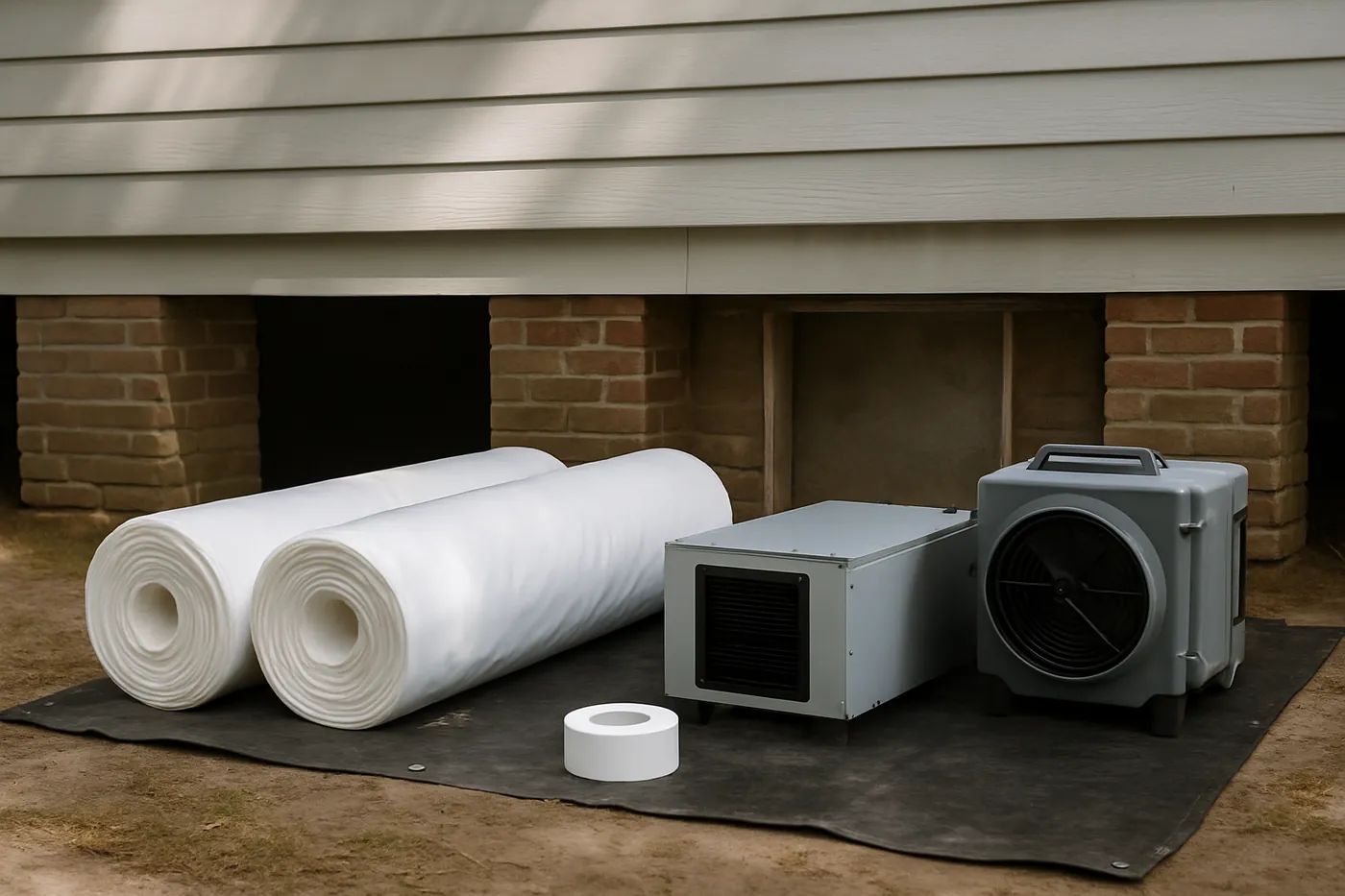
Most jobs run $1,500-$6,000, with crawl space work at $2,500-$9,000 when sealed ground and drying are part of the fix. On newer homes the honest answer is frequently a mechanical correction costing far less, so ask for the readings that show which one you need.
Evans grew in the 1990s and 2000s
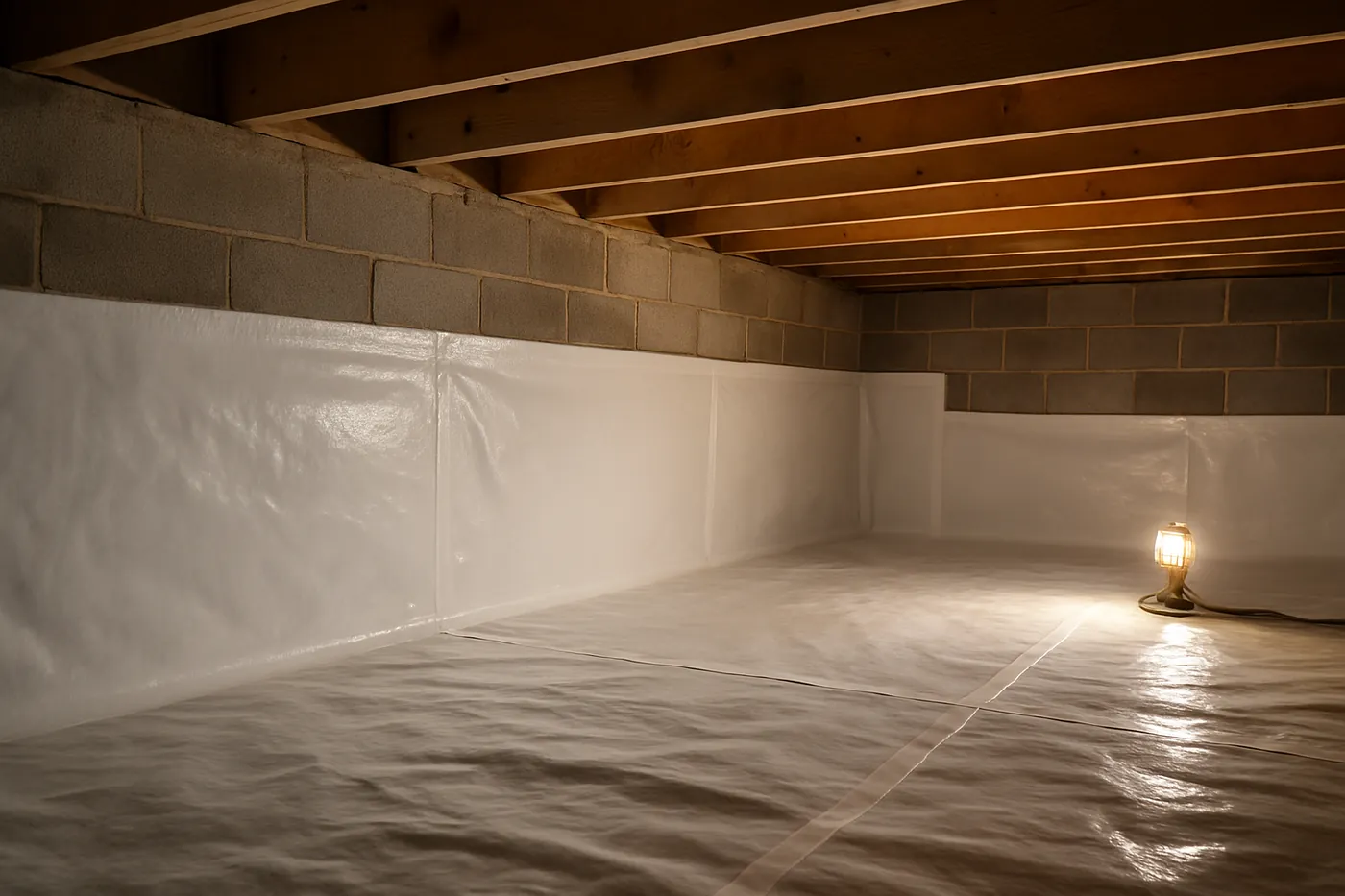
About 13,400 homes stand in the Evans Census-designated place in the 2020-2024 American Community Survey. The 2000s and the 1990s each account for roughly 27 to 28 percent, the 2010s add about 19 percent, and only around 12 percent predate 1980. That is the tight, younger stock described above, and many of its original air conditioners have already been replaced once. Ask whether the replacement was sized from a load calculation or simply matched to the old unit.
Bettys Branch, Jones Creek and Mt. Enna Branch
FEMA's detailed flood study around Evans follows Bettys Branch, Mt. Enna Branch, Jones Creek and a tributary of Marshall Pond, and Zone AE and Zone A areas with floodway lie within two miles of the community's center. The U.S. Geological Survey has gauged Reed Creek and Uchee Creek where GA 104 crosses them near Evans. Subdivision lots that back onto those branches are where a crawl space humidity problem can also be a ground water problem.
Columbia County handles permits
Evans is not a city, so building and HVAC permits come from Columbia County Development Services, which includes the Building Standards, Plan Review and Permits divisions. Replacing an air conditioner or adding a dehumidifier circuit is the kind of work to ask that office about.
Get an Augusta mold inspection
Tell us what you’re seeing or smelling: a musty smell coming up through the floor, cupping hardwood, condensation on ductwork, staining on a wall, and we’ll pass it to one independent local specialist for an inspection that includes going under the house. A local specialist serving Augusta calls you back.